On iPhone Duo
Mercaz is laid out for iPhone Duo open, closed and partly folded.
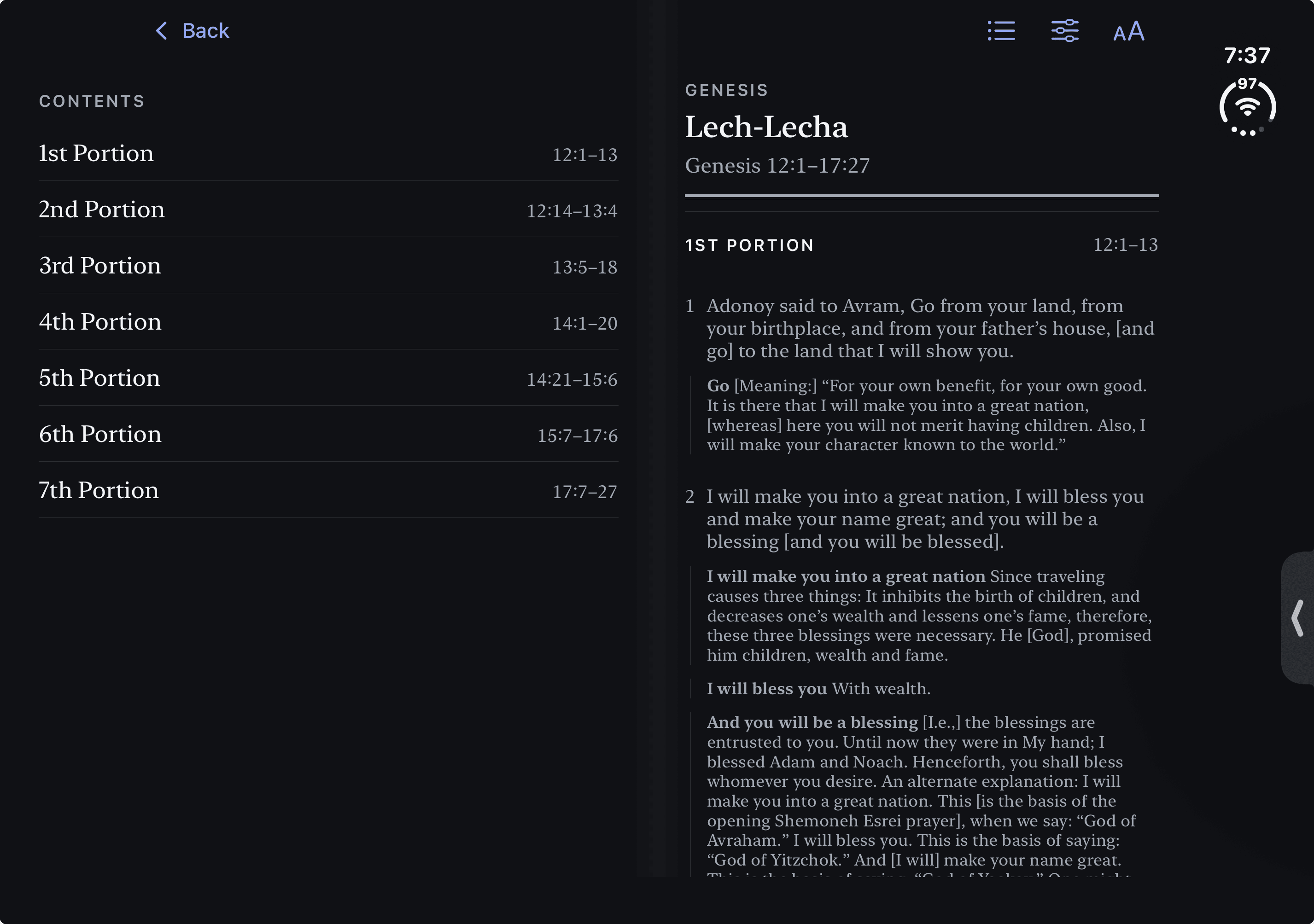
The siddur opens as a book, Today becomes two facing pages, and stood partly folded like a small laptop, Today becomes a desk display. Mercaz does not need iPhone Duo: on any iPhone it is one column.
Coming soon to the App Store
A free week, then $18 a month or $180 a year. For iPhone and iPhone Duo.

Closed, on the front screen
Closed, Mercaz is laid out in one column, as it is on an ordinary iPhone.


Open, like a book
Open, each page becomes two facing pages with the fold between them. On Today the date, the sky and the day’s figures take the first page, and the day’s entry, what is open now and the hours from now, takes the second.
The siddur is an open book. Progress sets the week beside one practice’s year.


Open and held upright
Held upright, every page has its own form for the tall screen. Today’s sky runs across the top and stays in place while the day scrolls under it; the calendar keeps the month above and the chosen day below.


Partly folded
Bend the phone and the page is already either side of the fold, so nothing moves. On Today the fold becomes the sky’s horizon.
The desk display
Stood partly folded like a small laptop, Today becomes a desk display: the time, both dates, the sky and what you have kept today.
The standing half is read at a glance from across a room: the time, with the Hebrew date above it and the civil date below, on the sky. The flat half holds the detail. On Shabbat and festivals it is for reading only.

Your place is kept
Opening, closing or bending the phone does not lose where you were: the page you had open, how far you had read, and what you had chosen all stay.